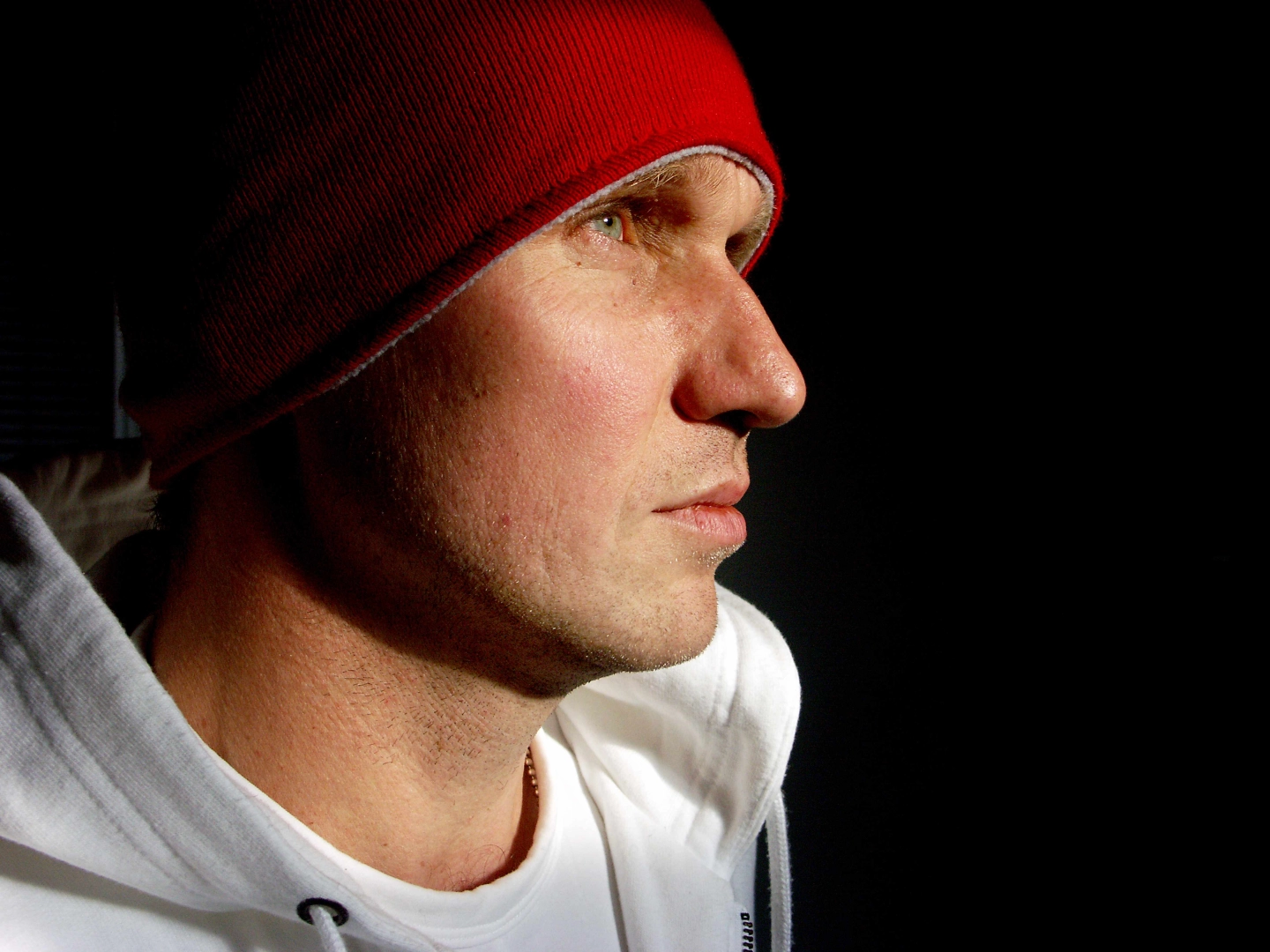
If we look for stars among contemporary Czech painters who entered the scene in the 21st century, Jakub Špaňhel cannot be overlooked. He has found a stylistic position that is appreciated by strict critics as well as those who would otherwise steer clear of contemporary art. No one else paints like this. His works are based on an abstracted reality; they are not descriptive, conveying only what is necessary, getting to the essence—whether it's the depicted figures, architecture, or nature, such as butterflies, which are a key element of his portfolio. His paintings leave space for the viewer's imagination and interpretation. Theorists speak of expressive Impressionism. What he does, he masters, and for this, he is highly regarded. Jakub’s paintings are among the most sought-after in the art market.

I was intrigued to learn that he enjoys having something to paint, and it doesn’t necessarily have to be a theme he sets for himself: he likes to take on challenges. He doesn’t see external pressure as a limitation; rather, it’s a driving force, a trigger for creativity. For example, he participated in several group exhibitions organized or initiated by the platform Sport in Art, which focuses on bridging the world of sport and the world of art. It was precisely through these exhibitions – because I was invited to curate them – that I had the opportunity to meet Jakub personally. For instance, he painted works dedicated to ice hockey (the exhibition Na led! at the Kinský Palace of the National Gallery) or cycling (the exhibition Jízda at the EPO1 Contemporary Art Center in Trutnov). In the past, he also took part in projects focusing on cross-country skiing (Skol!!!: A Tribute to the Jizerská 50 at the Liberec Regional Gallery), as well as the phenomenon of the Sokol movement (a portrait of its founder Miroslav Tyrš, who admired the ancient ideal of kalokagathia, emphasizing the harmony between physical and mental beauty).
You can purchase original works by Jakub Špaňhel by following THIS LINK.
He always delivered the paintings on time, and the acrylic paint he used barely had time to dry. It was clear that he enjoyed it. He could step out of the certain stereotype an artist naturally falls into when limited to personal sources of inspiration, no matter how remarkable they may be. After all, what else could one keep painting?

Jakub painted the works for the cycling exhibition in Trutnov in the Italian city of Venice, considered the most beautiful city in the world: yes, we must admit it, it even surpasses the graceful and beloved Prague. Jakub fell in love with Venice when he was studying art history: he dreamed of one day moving there. And he succeeded. After all, dreams are not just for dreaming, but for coming true.

In this context, I was intrigued to learn that Jakub did not spend his childhood in his hometown of Karviná only with a pencil in his hand. He was very active in sports, played handball, and skated in the winter. The most time, however, he spent cycling, both road and mountain biking. He even invented an as-yet-unknown discipline. He tried underwater cycling by submerging himself below the surface of a lake created as a result of coal mining. No one had thought of something like that before. On the other hand, painting by candlelight, fixed to his head, although it may seem original, was not his invention: as a boy, he wanted to emulate the Spanish painter Francisco Goya, who used this method to cope with the lack of light during the night while confronting his demons with the help of his brush and paint.

He now has a studio in Venice, where he finds the much-needed peace that he lacks in Prague or in Svatý Jan nad Skalou, where he lives. He is in his element. Perhaps he will revive his underwater cycling, his innovative discipline, since in Venice, built on the lagoon of the Adriatic Sea, the conditions for it are certainly more favorable than in Karviná. All he has to do is step outside his house, and he is on the shore of the famous Canal Grande, where boats, small boats, barges, and the famous gondolas glide by.
You can read more insights from Petr Volf on the world of art and sport HERE.