Vít Krejčí became only the fifth Czech ever to carve out a place on the floor of the world’s greatest basketball league. By the time he was eight, he already knew—without a doubt—that his future lay in the NBA. At fourteen, he set off on that path through Spain’s Zaragoza, where the fearless teenager was thrown straight into the fire of ruthless competition. He stayed six years, and he proved himself. In 2020, at just twenty years old, he heard his name called in the draft and finally got his first taste of the NBA wearing the jersey of the Oklahoma City Thunder.
Text: Milan Tesař
What’s remarkable is that Vít has never forgotten where he came from. A native of South Bohemia, he gave back to his hometown of Písek—the place where he first played for the local Hornets—by helping to build a new court. He even co-designed it together with Martin Kafes33 Hirth, a name well-known on the Czech graffiti scene. And that’s not all. Year after year, he returns there to help talented boys and girls chase their own dreams. Today the Atlanta Hawks point guard shares his story with them—a story that proves you can set out for the very center of the basketball universe even from a small town. Nothing is impossible.

MT: Recently, a clip went viral on social media where you made a blind full-court pass that set up a teammate to score. Do you see that as a kind of art?
VK: I’m not sure about that—but the players I consider true artists all share one thing. They have passion. They love the game. And maybe that’s why, when they play, everything just looks so much easier.
MT: Is it that same passion you try to instill in the kids at your camps?
VK: What matters most to me is effort. That’s the deciding factor. Sometimes, a talented kid, once they realize they’re ahead of the others, tends to ease off, maybe even start slacking. That’s why I’m careful with praise—I don’t want them to slip into complacency. Even bringing my American coach to the camp was meant to show that, first and foremost, hard work is non-negotiable. I was thrilled to see every single kid push themselves to the limit—that’s a very good sign.

MT: Do you see yourself in those kids?
VK: Absolutely. When I was twelve, that was the turning point—I decided basketball was what I wanted to do for the rest of my life.

MT: It’s said that you told someone in an interview, at just eight years old, that you’d play in the NBA.
VK That’s true—but back then it was nothing more than a dream. At twelve, I realized I could hold my own even against older players from all over the country, and that I could take my game to another level.
MT: Did you even have a room of your own as a kid?
VK: No, I shared one with my sister.
„
Heading overseas was a huge leap for me. In Spain, my parents could always hop on a train and be with me in just a few hours. Over here, I was completely on my own.
MT: What did you have hanging on your wall?
VK: My favorite players: Dwyane Wade and Allen Iverson—I really saw myself in them. And like me, they weren’t the biggest guys out there.
MT: Did you watch NBA games live, even though they started at three in the morning our time?
VK No, but as soon as I got home from school, I’d toss my bag in the corner and go straight online to watch Allen Iverson highlights. Then I’d head to the gym with my dad and spend hours and hours copying his moves until I got them right.
MT: Any singers or bands on your wall, too?
VK Back then, not really. Music didn’t mean that much to me. It’s only now, living in Atlanta—where basketball and hip hop culture go hand in hand—that I’ve really gotten into it.
MT: What did your parents do for a living?
VK My dad was a soldier and a paramedic, my mom was a secretary—now she works at a hospital.
MT: Did they push you only toward sports, or did you try other things too?
VK: My mom always made sure I kept up with school. Balancing classes with training wasn’t easy, but I did try out other things along the way.


MT: Like what?
VK: I tried playing guitar, but I always ended up going back to basketball. Nothing else ever stuck—I always felt like I was wasting time, so I’d return to the gym. Looking back, I regret that a bit. I wish I had another skill, but the line was clear.
MT: Wasn’t it hard to leave your friends behind at fourteen and move to Spain with just your mom—new language, new school, new customs?
VK: At the time, I didn’t really think of it that way. When someone said “Spain,” all I saw was Real Madrid and Barcelona—top-level basketball. When the offer came, I saw it as the obvious first step toward my dream. Only later did it hit me what it would really mean—not just as an athlete, but as a person. Nobody there spoke English, so the club hired a Spanish tutor. Those first months were brutally hard. Training from eight to three, then school. I didn’t see my family for a whole year, and I kept putting pressure on myself. I felt like, now it’s for real. I’d sacrificed so much, I couldn’t let it slip away. Back home in the Czech Republic, if I had a bad game, nothing happened. In Spain, I was terrified they’d send me back—and that everything would be for nothing.
MT: The year 2020 was crucial for you. Oklahoma drafted you, but at the same time, you tore your ACL.
VK: That’s right. Even now, I find it incredible they took that risk on me. Honestly, I hadn’t shown all that much in Spain. And still, despite my knee injury, they drafted me and invested in my rehab.
MT: And you’ve had more than one recovery. When an athlete can’t really move, how do you pass the time?
VK: Honestly, PlayStation saved me. Going overseas was a huge leap. In Spain, my parents could hop on a train and be with me in a few hours. Here, I was completely alone. And with Covid on top of it, that first year felt really isolating. I poured all my energy into rehab.

MT: Did you ever have dark thoughts? Like, what if an injury never fully heals?
VK: I had my fair share of injuries. There were moments when I really didn’t know how things would turn out. The first thing I always thought about was what my family and I had sacrificed. We’re from Strakonice—my dad drove me to Písek every single day, and I spent so much time in the gym that my mom took on a second job just to keep things going. My sister was seventeen when I left for Spain. Everyone was running around, and it must have been really hard for her. My whole family gave so much so I could chase my dream. Thanks to them, I never lost hope.
MT: Did you have a childhood idol?
VK: Allen Iverson, as I mentioned before. He was completely different from everyone else—never stopped being the kid from the streets. That’s what fascinated me about him. For me, he represented a world completely unlike the one I lived in back in the Czech Republic. And I wanted to live in that world too.
MT: Was that connected to music as well?
VK: Absolutely. NBA highlight reels always had rap playing in the background. I have songs I haven’t heard in ten years, but a few notes are enough, and I instantly remember my beginnings. For example, a Wu-Tang Clan track played under my favorite Iverson video, and when I heard it again years later, I immediately remembered what I was listening to while learning his moves.

MT: What’s it like when you find yourself on the court alone, surrounded by such top players?
VK: It’s like a video game turning into reality. The first thing I thought when I stood there was, I’ve been watching this court for years—and now I’m standing on it. The real shock comes with huge arenas like Madison Square Garden. My first game there was an unforgettable experience. Movie stars sit in the front rows, and with the big rivalry between New York and Atlanta, the atmosphere was intense.
MT: Was America a cultural shock for you in general?
VK: America actually felt closer to me than the lifestyle in Spain. Still, when I first landed in Oklahoma, I was in complete shock—suddenly I was among cowboys, and the biggest cultural experience was a rodeo in a massive bar. Atlanta was a big change after that. Small town versus a major city, where in Midtown and Downtown you can immediately feel the rap and showbiz culture. You really feel it in basketball. The rap scene is incredibly rich, representing East Coast rap, which is harder and faster than West Coast rap. You can also see how different basketball culture is compared to, say, hockey.
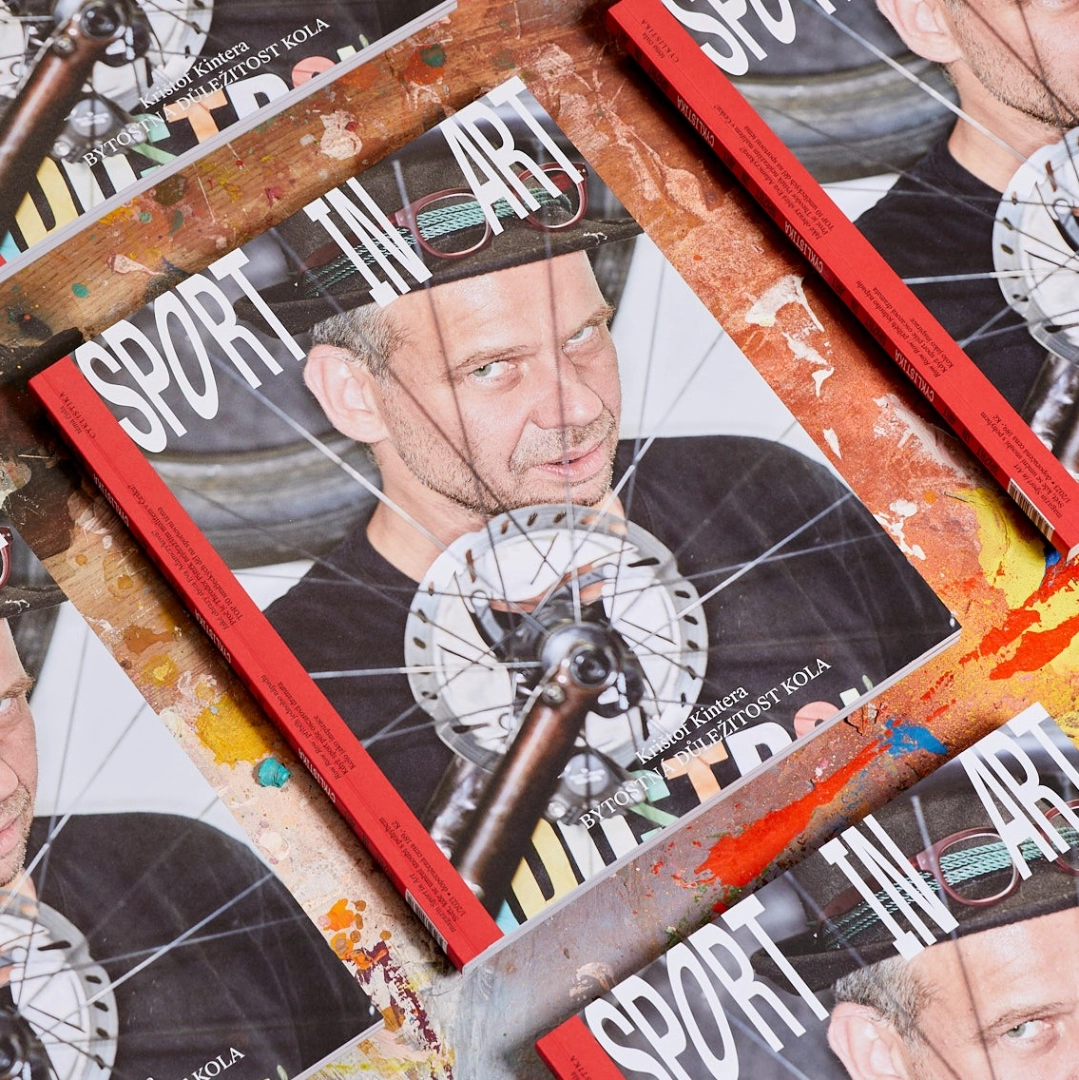
You can read the full article in Sport in Art #9: Basketball.
Get the current issue HERE, or subscribe to the print edition for a full year at a special rate.