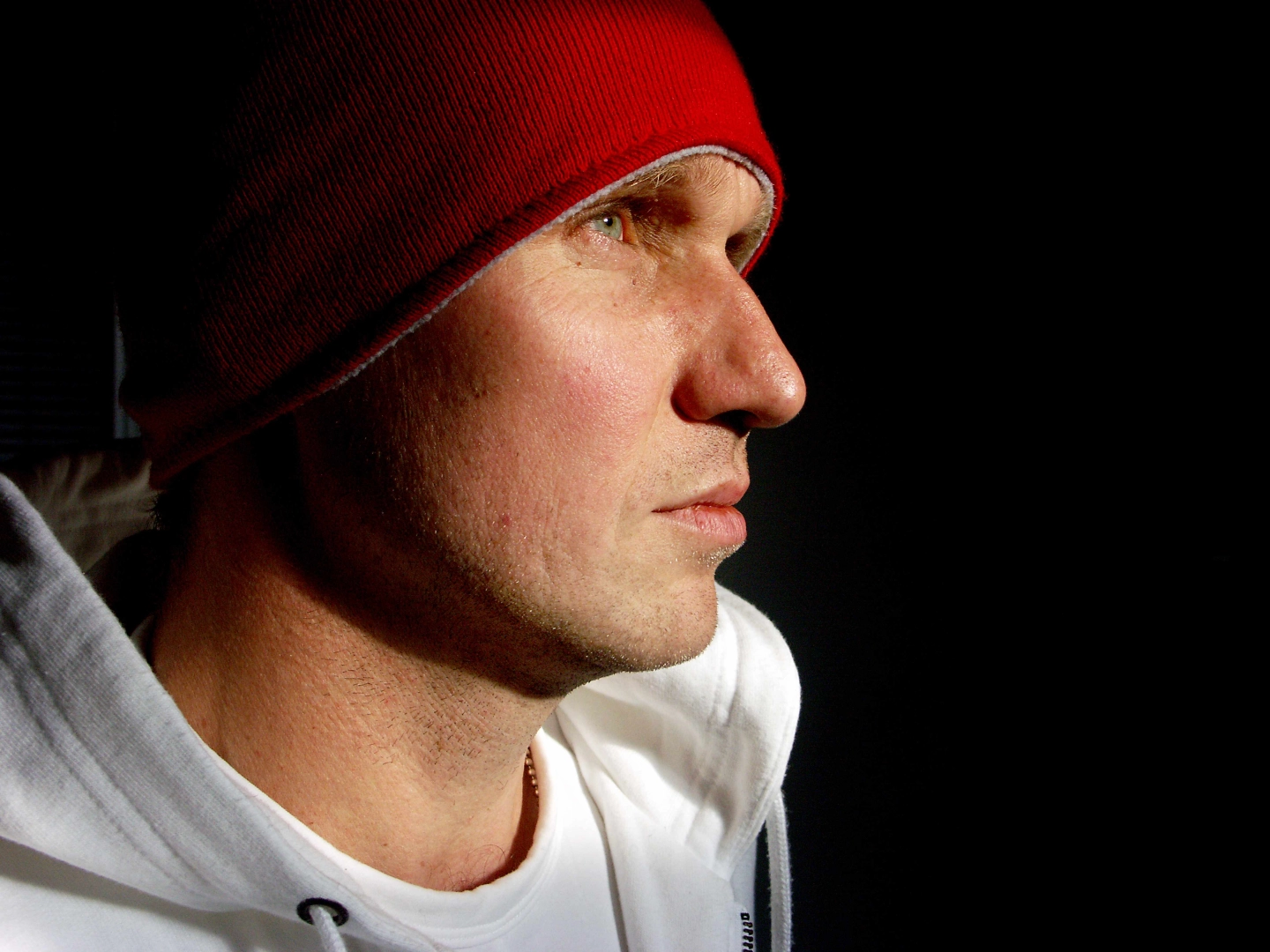
Architect Petr Kolář, who founded the ADR studio with Aleš Lapka in 1996 while still a student, designs family villas, houses, residential complexes, hotels, schools, and breweries. One of his very first projects, the Slavia Prague rowing clubhouse, was immediately and enthusiastically received by critics as a prime example of late 20th-century neo-functionalism. Every commission is a success. He even managed to "settle" an island in the Maldives with such ingenuity that it ranks among the most awarded of the world's ultra-luxury resorts. He is a connoisseur of art and sports. It seems he does everything to the fullest and with joy. After all, a film was made about him titled The Architect Who Fulfills His Dreams. All his interests are reflected in Hostivař, where, together with developer Martin Kulík, he built a residential area with his own home, as well as a golf course that stands out by also being an open-air gallery. I have never seen anything like it anywhere. "I concentrated the hobbies I pursue in one place where I found my home," he explains to me during a ride around the course to give me an idea of what he loves. It was a wild ride, where I had to balance to keep from falling out of the golf cart, which Petr steered between the sculptures with the uncompromising courage of a motocross rider heading straight for the finish line.
PV: When did you get the idea to combine sports with art?
PK: For me, it's a lifelong mindset. Because I played sports at a top level and devoted myself to architecture, I incorporated art into both areas. At the golf complex, we created a place that people immediately fell in love with. Shops, cafes, sports facilities, and art. We are now shooting documentary films about individual sculptures and sculptors so that the public can develop a relationship with fine art.
PV: So it is also about a kind of public education for you?
PK: You could say that. Many people don't understand contemporary art, which makes them afraid of it, so they avoid it. Sculpture in public space practically doesn't exist, and if it does, it's just exceptions—one or two pieces. We already have such a concentrated collection of sculptures that we changed the name from Golf Hostivař to Galerie Golf (Golf Gallery), which we want to gradually make accessible even to those who have no connection to golf. First, it was once a month, then once a fortnight, when we close the course and hold curated tours for twenty people at a time. They sit in golf carts, stop at each sculpture, and get the necessary information from the curator. We want a representative cross-section of Czech sculptural art from recent decades to be established here within three years, so that a person who comes to play gains a thorough overview of what quality modern art looks like. You don't see sculpture gathered like this anywhere, especially the more monumental pieces, because it's hard to put such a collection together and also necessary to secure the space for such sculptures to stand out. In two weeks, for example, we are installing a seven-meter sculpture by Čestmír Suška.
PV: Do you buy the sculptures from the authors, or are they loans?
PK: Usually, we agree to buy one sculpture from the artist and allow them to install several others that are intended for further sale. Instead of having the sculptures in a yard or a studio, they can be seen in an interesting environment, and we present them in a suitable way to highlight their quality. David Černý’s sculpture In Utero didn't stand out at all on Dlouhá Street in Prague, but then it came here, got beautiful southern and southwestern light, which brought out the beauty of the material. It couldn't breathe there, whereas here it has blossomed. It is one of our most photogenic sculptures; on a small hill, near the water, it changes every day, depending on the season. I absolutely love looking at it.
PV: Do you have favorites?
PK: I have a lot of friends among sculptors, but even so, I can say that I strive for the broadest possible cross-section of the contemporary sculpture scene. That's why you'll find abstraction, stylized reality, and minimalism there. About five sculptors are added every year, and we want to constantly develop the collection to keep it current. We are not after quantity, but quality. For me personally, it's essential that I have a personal connection to the sculptures; I am interested in their story and the author's personality. We formally present each new sculpture at an opening event. And when we acquired Pád (The Fall), one of the most famous sculptures by the legendary Stanislav Kolíbal, a hundred people came and listened to a two-hour lecture by the master, who will be a hundred years old in two years. I think it was an unforgettable experience for the attendees. Everything is constantly evolving; we want to build an amphitheater for concerts and theater here, as well as a covered gallery, making the complex multifunctional so that people from the surrounding area can use it too.
PV: When the complex was being created, one of the first significant acts where your architecture merged with art was the collaboration with sculptor Jiří Beránek on the facade of the golf simulator hall. It was so unusual, surprising, and successful that the hall made it onto the cover of the book Collection: European Architecture published by the German publisher Braun. How did this timeless achievement actually come about?
PK: We needed to resolve the exterior of the prism to make it interesting and give the hall added value. My colleague Bobeš Novotný had just spilled some matches on the table, and when I saw them, it occurred to me that we could do the facade similarly: from wooden elements that would seemingly overlap chaotically. We knew we couldn't just nail them on randomly, but that the larch boards we intended to use had to have a certain composition. At that time, I approached the sculptor and my friend Jiří Beránek, a professor at the Academy of Arts, Architecture and Design, to see if he would help me with this task, because I knew very few people can work with wood like he did. He immediately liked the idea and then directed a crew of carpenters on how to nail the boards in layers to evoke the right visual impression. "To the right, to the left, a little more, left... and up!" He had an eye for it, centimeters played a role, and in the end, he succeeded: hats off, an interesting work of art was born, and yet it was the cheapest of all suitable solutions. Jiří Beránek is unfortunately no longer alive, but he is still with us this way. Whenever I look at the hall, which is practically every day, I see him sitting on the hill again, measuring out his composition.
PV: You also have sculptures by your house; I noticed, for example, a plastic artwork by Karel Malich, an object by Pavel Opočenský, and a sculpture by Jakub Flejšar. How is it living with them?
PK: In total, I have about eighty sculptures in various places. They bring me joy, but I get the same pleasure from the fact that neighbors are also acquiring sculptures for their gardens, which is certainly influenced—I must immodestly state—by the golf gallery. Sometimes people ask me what they should get, but they mostly follow their own taste, which is generally to my liking. It's as if the environment cultivates and shows the way. When I drive through the complex, I observe it with interest; the golf park has blended with housing and art.
PV: When you play golf, are you able to perceive the sculptures on the course, or do you just focus on a precise game?
PK: It's impossible not to perceive them; I approach them, I'm always watching them from different angles, seeing how they sit in their place. It hasn't happened to me yet that I would just pass a sculpture by, because they have a great power. I think other golfers experience it similarly. I am surrounded by art, I furnish interiors with art, it's part of the style of my work, where paintings and sculptures become a solid part of the architecture. I just enjoy it; we design all the houses we make so that there is a place to put art.
PV: So you also have to keep in mind that in the house you are designing, there are enough solid walls, because you can't hang much in a glass cube.
PK: There are many ways to work with art in a space. Naturally, paintings are best placed on walls, but they can be installed differently as well. Every object plays a role in the psychology of spatial perception, and often centimeters truly decide. That is also why architects, for instance, are involved in installing exhibitions, because they know exactly under what conditions the artwork will resonate best.
PV: Your collection also includes works by top international artists like Jeff Koons, Anish Kapoor, Damien Hirst, or Tony Cragg. Do you know any of them personally?
PK: I think I can say without exaggeration that I am in close contact with Tony Cragg. I have visited him several times at his studio in the sculpture park near Wuppertal, which is an incredible place in the forest, fourteen hectares of art and nature in a sensitive connection. I have a sculpture of his at home. For some, it's a globally liquid investment, but for me, it's more than just an expensive piece. Every day when we wake up, the whole family walks around the sculpture. It's part of our world, and I can't imagine getting rid of it or replacing it with something else; that's simply impossible. His feel for sculpture, for composition, for balance, is incredible.
PV: You have been collaborating long-term with most Czech artists, with many since their student days when they were unknown. How do you choose them?
PK: I have to like it, I must have a connection to it, the painting must communicate with me and speak to me. I don't see art as an investment, because I love it, but if a piece appreciates in value, that's fine and I don't mind. However, that's not the primary motivation. In the 1990s, while still a student, I bought sculptures from Věra Janoušková, which are impossible to get today because they don't appear on the market; I acquired fourteen of them back then. I visited artists in their studios, and conversations with Jan Kubíček, Stanislav Kolíbal, or Zdeněk Sýkora enriched me. I educated myself, learning things that couldn't be read anywhere. It completely absorbed me. I wanted to own their work even though it was expensive for me, and many people—at a time when the art market was just slowly developing—thought I was crazy. They don't think so anymore.
PV: Since the 2012 Games, you have collaborated with the Czech Olympic Committee on creating the Olympic Houses, which have met with great acclaim. How do you remember London, where this interesting tradition connecting the worlds of sport and art began?
PK: The positive response the Czech House generated actually surprised me; crowds of visitors from all over the world went there. And, for example, David Černý's bus that did push-ups appeared in all the major London media and became an iconic piece. The dominant feature of the main space itself was a cycle of sports paintings by Michael Rittstein, who painted all the disciplines competed in at the games. Architecture, art, and sport were connected, along with the overall choreography of the Czech participation in the games, making it both entertaining and cultured. Suddenly, all the competitors stared open-mouthed because their houses were focused solely on sport, whereas we aimed for a synthesis where art and sport are parts of a cultured lifestyle. A kind of total theater took place there, and I deeply appreciate the opportunity to have been at its birth.
PV: Did you manage to achieve something similar at the Winter Games, where the conditions are quite specific?
PK: We did! At the Winter Olympics in Pyeongchang in 2018, it reached a point where the Czech House became the center of all celebrations. So at one moment, there were maybe thirty medalists from various countries gathered there—Canadians, Americans, French, Norwegians, Czechs... Athletes showed each other their trophies and everyone experienced a unique euphoria that is probably only possible at the Games. Our reputation spread quickly. By the way, the glass athlete sculptures for the Czech Olympic House were created by Maxim Velčovský, and the Lasvit company, where Maxim is the creative director, represented the trophies that the winners of the Tour de France receive every year.
PV: Another initiative you participated in are the Olympic Parks, where since 2014, people in the Czech Republic could try various sports during the Games, whether summer or winter. People could play sports and cheer there.
PK: The parks mainly brought a lot of new participants to sports; they had enormous attendance. The only disadvantage was their temporary nature. I think they would deserve to be developed into a permanent, year-round complex where all sports would be represented, and everyone could choose the one most accessible or fun for them. When we had, for example, a bobsleigh simulator for practicing starts, pushing, and jumping in at the Olymp center in Prague, it was besieged by parents and children who could suddenly experience something up close and firsthand that is otherwise inaccessible. It gives me a huge energy boost just to sit there and watch the action.
PV: You designed the luxurious island resort Velaa in the Maldives, which is exceptional even on a global scale. In this context, it occurs to me that it might not be a bad idea to establish an island resort purely dedicated to sports... A paradise of movement. Wouldn't that be worth considering?
PK: It would definitely find its clientele, just like Velaa did, where people mostly go to rest, but if they want to, they have plenty of sports opportunities. They can play golf, volleyball, football, badminton, tennis, padel, squash, or they can climb the climbing wall or engage in many types of water sports.
PV: How would you describe your approach to architecture? What is a priority for you?
PK: In contemporary buildings, their appearance is often considered more important than how the interior spaces are resolved. Interiors get sidelined because richly shaped facades dictate the design. We, however, always try to start from the given building typology, and only then do we deal with the composition of window openings, balconies, roof pitch, articulation, and material selection. I wouldn't dare claim it's the only possible approach to architecture, but for me, it's always crucial to solve the building's operation, its natural connection between interior and exterior, and only then the rest that might eventually turn it into a visually appealing object. We can always draw a house so that it’s an attractive interplay of masses from the outside, but the moment its layout, typology, and operations don't work, the building itself is bad because it remains purely in the realm of formal aesthetics. For us, it is important that things work well and serve the users.
PV: You build abroad, in France, Turkey, or Canada, but also in Honduras. Does the approach in these countries differ somehow from how architecture is "done" in the Czech Republic?
PK: It's easier abroad, which is why we are increasingly working there. In the Czech Republic, everything drags on incredibly. The creative part is short; from the first idea to the completion of the study, it takes about two years, but before you get a building permit, it takes eight or ten years unless you agree to a series of compromises. Before a house even begins to be built, it is already ten years old, and by the time the client moves in, twelve years have passed since the first sketches. That is terrible. I love Prague and I don't want it to be ruined, but building in it today is a suffering, not a joy. Everything tends toward mediocrity and lack of imagination because many of today's new builds are the result of concessions to officials who influence the original architectural intentions. That is why residential buildings, in particular, are so similar and interchangeable today. Civic initiatives are a whole other chapter; they step in the moment the authorities finally grant a building permit, and everything starts all over again and fades away. There is no defense against that.
PV: You are known for your passion for sports. What sports did you devote yourself to the most in your childhood and youth?
PK: Our parents led my brother Pavel and me to sports so we could burn off our excess energy and not have a chance to act up at home. I played competitive tennis, swam, skied. As a child, I tried many things, including gymnastics, but I devoted the most time to handball. I played in the youth league for Slavia and later, during my military service, among men in Dukla Litoměřice in the second highest league. I was a shooter, playing the backcourt position.
PV: Did you find any value in sports that you could apply in life off the field?
PK: Absolutely. Sport cultivates qualities in a person that are useful outside of it too. When you play a team sport, you learn discipline, for instance. And because you aren't just playing for yourself, you adopt a team mindset, learning how to behave and function in a broader group where everyone depends on each other. For me, it was important that thanks to sports, I could travel during socialism. I saw Paris, Rome, and other capitals, visited Scandinavia and Germany with the handball players. As a young boy, I went to the West several times a year, and perhaps what I saw there influenced me when I decided on the architecture profession. At the beginning of the 1990s, when the borders opened, I didn't have to discover foreign countries like others did, because I had already been through it.
PV: What sport do you prefer today, besides golf?
PK: Over time, I fell in love with yachting, in which I became a two-time national champion with my friend Martin Kulík. I ride a motorcycle, mainly across the United States. Just like in my youth, I still ski; I’ve tried heliskiing... There is a lot. Sport continually enriches me. At home, I have a playground, a climbing wall, a basketball hoop, a rowing machine, a pool, and when I walk out of the garden, I find myself on a golf green.
PV: When do you experience moments of happiness?
PK: It seems to me like all the time. I get up in the morning and I am happy about everything that awaits me, even if it often means solving some work problems. I love my work, my children who are following in my footsteps, I have a great home, and lots of amazing friends. It feels like I live a miraculous life because I do things the way I want. I have always gone after a goal I wanted to achieve. And I managed to do it.